

How to Get Tile Grout Off Tiles
That cloudy film after grouting is grout haze, and the trick is timing. Buff it off while it's fresh, step up to a haze remover if it has set, and match the method to your tile. Here is how to clear grout off tile faces without scratching or etching them.
You've finished grouting, the tiles are down, and now there's a dull, chalky film across the whole surface. That's grout haze: a thin layer of dried grout left on the tile face. So how do you get it off without wrecking the finish underneath?
The good news is that most haze wipes away with the right method and a bit of speed. Leave it too long, or reach for the wrong tool, and it gets harder. Metal scrapers scratch, acids etch stone, and a fully cured film needs far more effort than a fresh one.
Key takeaways
- Speed wins. Grout curing takes days, so the sooner you tackle haze, the easier it lifts (Bedrosians, 2026).
- Start gentle. Dry buff, then a damp cloth, then a pH-neutral haze remover before anything stronger.
- Acid is for glazed tile only. A mild acid or vinegar clears cement haze on ceramic and porcelain, never on natural stone.
- Epoxy is different. Epoxy grout haze needs an epoxy-specific remover and quick action; it sets hard fast.
Once the haze is gone and the tiles are clean, keeping them that way is easy: our guide to cleaning tile and grout covers the ongoing routine.


What's the easiest way to get grout haze off tiles?
Buff, then wipe, then treat. Grout can take days to cure, so the sooner you act, the easier the haze lifts (Bedrosians, 2026). Start with a dry microfibre cloth, then a cloth dampened with warm water, using light pressure.
For a lot of jobs, that's genuinely all it takes. Buffing knocks the loose film off, and a damp cloth clears the rest. Work in circles across the whole surface, rinsing the cloth often so you lift the haze away rather than just spreading it around.
Still cloudy after buffing? That's your cue to step up to a proper grout haze remover. On porcelain, reach for a pH-neutral haze remover first, since the glaze can scratch or dull if you go in too hard. Test any product on one tile in a corner before doing the whole floor.
What tools do you need to get grout off tiles?
You don't need much, and you probably have half of it already. Start with the gentlest tools and only reach for the removers if buffing doesn't clear the haze.
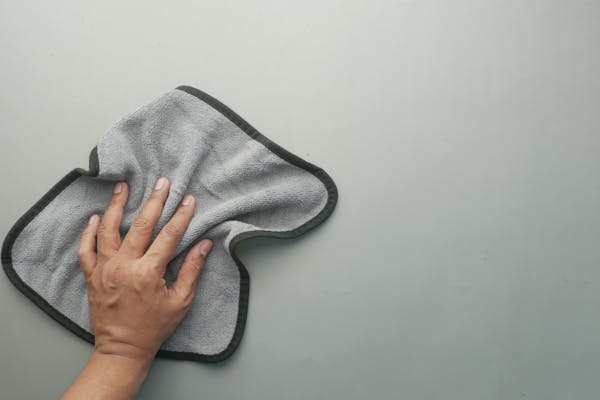
Microfibre cloths
Dry-buff the haze, then damp-wipe. Your first and gentlest tool.

Warm water & sponge
Soften residue and rinse off remover. Change the water often.

Rubber float or plastic scraper
Shear off ridges and lift lumps. Never a metal blade on porcelain.
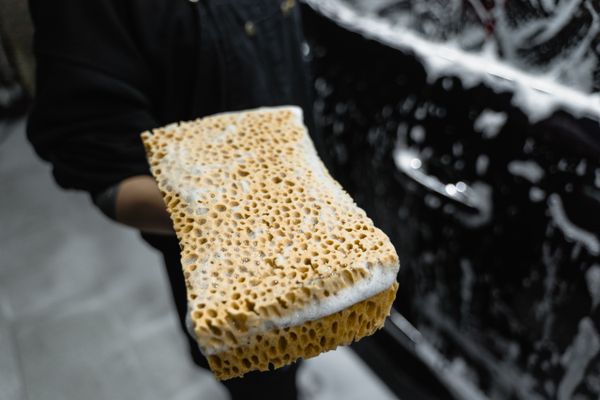
Non-scratch pad or sponge
Scrub the film without scratching. A soft sponge or white pad is the least abrasive.

Grout haze remover
Neutral for any tile, an acid type for cement film on glazed tile, or an epoxy remover for epoxy grout.
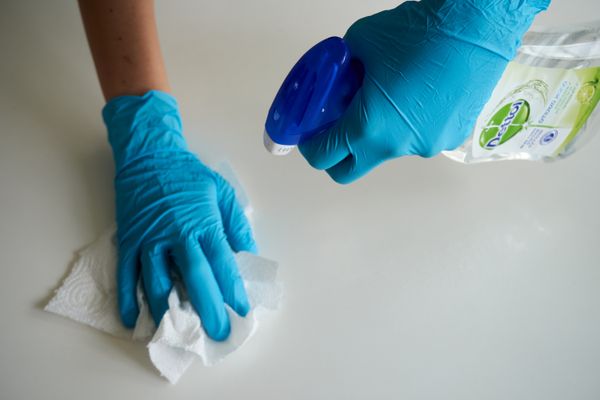
Gloves & eye protection
Wear them whenever you use an acid or chemical haze remover.
Buy the remover to match your grout. A pH-neutral haze remover is safe on every tile including natural stone. A mild acid or sulfamic remover suits cement haze on glazed ceramic and porcelain. Epoxy grout needs its own dedicated epoxy haze remover.
How do you remove dried or hardened grout from tile faces?
Thicker ridges and dried lumps need more than a cloth. Here is the safe order of attack that gets grout off the tile without scratching the surface.
Soften with warm water
Wet the area with warm water and give it a few minutes. Damp grout residue shifts far more easily than bone-dry film.
Shear ridges with a rubber float
Drag a clean rubber grout float across the tile at a shallow angle, like a squeegee, to shave off raised grout.
Lift lumps with a plastic scraper
Use a plastic putty knife or wooden stick on stubborn blobs. Never a metal scraper on porcelain; it scratches the glaze.
Work the film with a white pad
Apply a grout haze remover and scrub with a white non-scratch nylon pad. White pads are the least abrasive option.
Epoxy needs its own remover
For epoxy grout, use an epoxy haze remover: apply, let it dwell, scrub with a white pad, then lift residue with a spatula.
Rinse, dry and buff
Rinse thoroughly with clean water so no remover is left behind, then dry and buff the tiles back to a clear shine.
Can you use vinegar or acid to remove grout haze?
Yes, but only on the right tile. On glazed ceramic and porcelain, cement grout haze that has sat for a couple of days responds to a diluted vinegar solution or a sulfamic or phosphoric-acid haze remover (LiLi Tile, 2025). The acid dissolves the cement film so it wipes away.
There's a catch, and it matters. Acids etch natural stone like marble and travertine, and they can attack fresh grout in the joints. So dampen the grout lines first, keep the acid on the tile face, rinse thoroughly afterward, and never use vinegar or acid on stone. When in doubt, use a pH-neutral haze remover instead.
Test first, always. Try any acid or haze remover on a single tile in an out-of-sight corner and wait to see the result. Different glazes react differently, and a two-minute test saves you from hazing or dulling an entire floor.
Cement grout vs epoxy grout: does removal differ?
A lot. The grout you used decides how fast you need to move and which product will actually work. Here's the split.
Cement grout haze
Forgiving, with a wider window to fix it.
- Buffing and water clear light haze
- Acid or sulfamic haze removers work on glazed tile
- Removable for days, even a couple of weeks
- Still act early to keep it easy
Epoxy grout haze
Sets hard and fast, so speed is everything.
- Needs a dedicated epoxy haze remover
- Under 24 hours is easiest; a week or more is tough
- Acids won't touch it, so don't bother
- Scrub with white pads, lift with a spatula
Grout haze not budging? Step it up
Always start with the gentlest method and only move up if you need to. That protects the tile and usually solves the problem before you reach the harder steps.
Dry buff
A dry microfibre cloth, then a damp one. Clears most light, fresh haze with zero risk to the tile.
Neutral remover
A pH-neutral grout haze remover with a white pad. Safe on every tile, including natural stone.
Acid remover
A mild acid or sulfamic haze remover for cement film, on glazed ceramic and porcelain only.
Mechanical or pro
Rubber float, plastic scraper, or a tiler for stubborn or cured grout you can't shift safely.
How do you stop grout haze in the first place?
Prevention beats removal every time. Most grout haze comes from too much water and waiting too long to clean up. A little discipline during grouting saves the whole clean-up job later.
Wipe the tiles as you go with a well-wrung sponge, and change your rinse water often so you're not smearing grouty water back on. Use the least water you can, and once the grout has firmed up, buff the surface with a dry cloth before it fully cures. Catch the haze the same day and it barely forms.
The same-day buff. The single best habit is a dry-cloth buff a few hours after grouting, once the joints have set but the haze is still soft. It's the difference between a quick wipe and a weekend with a haze remover.
Grout-removal mistakes that damage tiles
Most tile scratches and dull patches come from the clean-up, not the grouting. Stick to the left column and the surface stays perfect.
Do
- Act while the haze is fresh
- Buff and damp-wipe before stronger methods
- Use plastic scrapers and white nylon pads
- Dampen grout joints before using acid
- Test every product in a hidden corner
- Rinse thoroughly and buff dry
Avoid
- Metal scrapers or blades on porcelain
- Vinegar or acid on natural stone
- Coloured or green scouring pads that scratch
- Letting epoxy haze sit for days
- Flooding fresh grout joints with acid
- Skipping the rinse and leaving remover behind
Rather leave the messy part to a pro?
Grouting and haze clean-up is fiddly, and one wrong move can mark a whole floor. The WA Kajaria Ceramics team supplies tiles and handles professional installation, grouting and finishing across Perth and Western Australia, so your tiles land clean and haze-free.
Getting grout off tiles: common questions
How long do you have to remove grout haze?
Act as soon as the joints have firmed up, ideally within the first day or two. Cement grout film stays removable for roughly 48 hours to two weeks, but epoxy haze is easiest under 24 hours and much harder after a week (Bedrosians, 2026). Sooner is always easier.
Does vinegar remove grout haze?
Diluted vinegar can clear cement grout haze from glazed ceramic and porcelain. Dampen the grout joints first, keep it on the tile, and rinse well afterward. Never use vinegar on natural stone like marble or travertine, since the acid etches the surface permanently.
What removes grout haze from porcelain without scratching?
Start with a dry then damp microfibre cloth, then a pH-neutral haze remover with a white non-scratch nylon pad. Use a plastic scraper or rubber float for raised residue. Avoid metal tools and coloured abrasive pads, which can scratch or dull the porcelain glaze.
How do you remove epoxy grout haze?
Use a dedicated epoxy grout haze remover. Apply it, let it dwell as directed, scrub with a white pad, then lift residue with a spatula. Speed matters: epoxy haze is easiest to remove within 24 hours and needs a stronger stripper and more dwell time after a week.
Will grout haze go away on its own?
No. Grout haze doesn't wash off with normal cleaning and only hardens as the grout cures, so it needs removing. Left alone it dulls the whole surface. Buffing and a haze remover clear it, and catching it early makes the job far quicker.
References
- Bedrosians Tile & Stone. Removing Grout Haze From Porcelain Tile: Safe Methods That Don't Scratch. Retrieved 2026-07-21, bedrosians.com
- LiLi Tile. Efficient Ways to Remove Cement Grout Haze from Tiles. Retrieved 2026-07-21, lilitile.com
- Mapei. Removing Grout Haze (technical guidance). Retrieved 2026-07-21, mapei.com
- Defusco Industrial Supply. How to Remove Epoxy Grout: Haze, Residue, and Cured Joints. Retrieved 2026-07-21, defusco.com

